
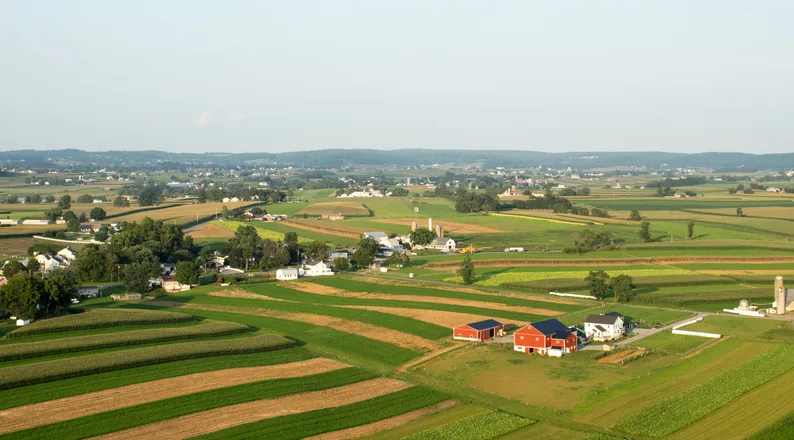
Lancaster County, Pennsylvania
Lancaster County Public Adjuster
Your Lancaster County claim. Our legacy.
From Lancaster City and Ephrata to Lititz, Columbia, Elizabethtown, Strasburg and the surrounding farm townships, we document every detail of your property damage claim so Lancaster County homeowners, farm owners and business owners recover what their policy actually promises, not the carrier's first number.
Call us 1st before you call your insurance, we handle it all.
Trusted by Lancaster County property owners
#726839
Licensed Public Adjuster
Member
Chester County Chamber of Commerce
15+ years
public adjusting experience
Lancaster County property claims
Working farmsteads, historic boroughs and a dense brick city. Three very different claims.
Lancaster County has one of the most varied building stocks in Pennsylvania. Lancaster City is 19th-century brick rowhomes with shared party walls, stone cellars and original cast-iron and galvanized plumbing. Ephrata, Lititz, Manheim, Elizabethtown and Strasburg add historic borough housing alongside postwar and newer suburban development. Push out into Leacock, Salisbury, Earl and the southern townships and you are in working farmsteads, bank barns, tobacco sheds, silos, greenhouses, poultry and dairy buildings, stone farmhouses on well and septic.
Those are not the same claim, and they should never be scoped the same way. A first offer written off a quick walkthrough tends to price a stone cellar like a finished basement, a party-wall smoke loss like a single-room cleaning, and a standing-seam barn roof like architectural shingle. We build the same carrier-grade, line-item scope of loss on every Lancaster County claim we take, whether it's hail on a New Holland barn roof, Conestoga corridor water in the city, a borough rowhome fire in Columbia, or equipment theft out of a farm shop.
Homeowners and farm owners
Protecting Lancaster County families and personal property after fire, water, storm, mold, or theft damage, including farmsteads, bank barns and every detached structure on the property.
Commercial and rental owners
Lancaster City and borough storefronts, mixed-use buildings, warehouses, shops and rowhome rental portfolios, including loss of rents and business interruption.
What carriers miss
Why Lancaster County claims settle for less than they should.
Outbuildings are underscheduled or skipped. This is the biggest gap in the county. Bank barns, tobacco sheds, silos, greenhouses, poultry and dairy structures, equipment sheds and detached shops frequently carry a fraction of their real replacement value on the policy, or are never walked at all after a hail or wind event. We inventory every structure and its contents, and price timber-frame, agricultural and metal construction at specialty rates.
Metal roof damage gets called "cosmetic." Standing-seam and corrugated panels dent instead of tearing, so a carrier estimate often writes hail impacts off as cosmetic and pays nothing. Dented panels lose coating integrity and shed water differently. We document impact density with test squares and tie it to a verified storm date.
Water gets called "flood" or "seepage." The Susquehanna along Columbia and Marietta, plus the Conestoga, Pequea and Cocalico, run through built-up ground. The flood exclusion gets reached for first, even when water came in through a wind-opened roof, a failed sump, or a sewer backup your endorsement covers. In old stone cellars, the second reflex is "long-term seepage." Cause of loss decides the claim, and it has to be documented before the adjuster writes it up.
Suppression water gets carved out of fire claims. Longer volunteer-department response times in the farm townships mean more burn and far more firefighting water, and in the city's rowhome blocks, smoke and water cross party walls. Both belong on the fire loss, and both regularly show up short on a first estimate.
Code upgrades left out of historic repairs. Once a repair opens walls in Lancaster City's pre-war stock or a 200-year-old stone farmhouse, code can require updated wiring, plumbing, insulation, egress or roof ventilation. Ordinance or law coverage exists for exactly that, and it is one of the most consistently omitted line items on a first carrier estimate.
Not sure your Lancaster County offer is fair?
Talk to a licensed public adjuster. Free review, no obligation.
What we handle
Every kind of Lancaster County property loss, documented properly.
Fire damage claims
Smoke and soot in city rowhomes, stone farmhouses and barn fires.
Water damage claims
Failed supply lines, sump failures, sewer backups and wet stone cellars.
Storm and wind damage claims
Roof, siding and tree-impact losses from Elizabethtown to New Holland.
Hail damage claims
Open farmland takes bigger stones, metal barn roofs, siding, HVAC coils.
Mold damage claims
Damp stone cellars and slow leaks in centuries-old housing stock.
Theft and vandalism claims
Tool, equipment and copper theft from shops, sheds and vacant properties.
Insurance carriers we deal with in Lancaster County
Most Lancaster County policies we see are written by State Farm, Erie Insurance, Allstate, Nationwide, Travelers, USAA or Liberty Mutual. We negotiate directly with all of them, so you are not the one on the phone chasing an adjuster, uploading photos or explaining your policy language.
On Lancaster County farm and rural claims, barns, silos, greenhouses and standing-seam metal roofing need specialty pricing, so we put those line items in front of the carrier rather than waiting for a residential shingle estimate to be corrected.
Company names are listed for identification only. Legacy Public Adjusters represents policyholders, not insurance companies, and is not affiliated with or endorsed by any carrier named here. Do not see your insurer? Contact us and we will still review your claim.
Local coverage
Towns we serve in Lancaster County
We work claims across Lancaster County. These towns have their own page with local claim detail, and we cover the rest of the county the same way.
We also handle claims in Ephrata, Lititz, Columbia, Elizabethtown, Strasburg, New Holland and every other Lancaster County borough and township.
How it works
Four steps from damage to settlement.
A clear roadmap from your first call to your final settlement, every step documented and fought for on your behalf.
Free claim review
Tell us what happened. We review your policy and damage at no cost.
Full documentation
Site inspection, photos, moisture readings and a line-item scope of loss.
Submit claim and negotiate
We file and submit your claim and handle everything with the carrier.
You get paid
Settlement issued on a fully documented claim. No recovery, no fee.
Why Legacy
Your policy is complicated. Your advocate shouldn't be.
Carrier adjusters are paid by the insurance company. We are licensed Pennsylvania public adjusters paid only when you recover, which means our estimate, our documentation and our negotiation all point in one direction: yours.
- Line-item scopes built on the same estimating software carriers use
- Every structure on the property inspected, barns and outbuildings included
- Metal roof impacts documented with test squares, not written off as cosmetic
- Cause of loss documented before the flood or seepage exclusion gets applied
- Transparent contingency fee, nothing owed unless you're paid
Google reviews
What our clients say.
Local claims guide
What a Lancaster County claim actually looks like.
Lancaster runs from working farmsteads and bank barns to historic borough blocks and dense city rowhomes, and the claim process changes completely with the building. Here is how the two most common local losses actually play out.
Storm, wind or hail claim on a farmstead, bank barn or outbuilding
Lancaster County's open farmland has almost no wind break, so a single line of storms can strip standing-seam panels off a bank barn roof while the house looks untouched. The structures that take the worst of it are frequently the ones a carrier estimate never lists.
- 1Every structure on the property is inspected, house, bank barn, tobacco shed, silo, greenhouse, poultry or dairy building, equipment shed and detached shop.
- 2Each roof slope and elevation is chalked and photographed with test squares so hail bruising, panel dents and pitting are documented before anything starts leaking.
- 3Standing-seam and corrugated metal roofing, timber-frame construction and agricultural buildings are priced at specialty rates, not residential shingle line items.
- 4We confirm how each outbuilding is scheduled on the policy, underscheduled structures are the single most common gap on Lancaster County farm claims.
- 5Ordinance or law coverage is applied where township code requires upgraded sheathing, wiring or ventilation once a structure is opened up.
Water or sewer backup claim in a Lancaster City or borough rowhome
Lancaster City, Columbia and the older borough blocks in Ephrata, Lititz and Manheim are built on 19th-century brick with shared walls, shared stacks and original cast-iron and galvanized plumbing over stone cellars. One failure in a block can put water into three basements, and the coverage answer depends entirely on where the water came from.
- 1We separate sudden pipe discharge, sump failure, sewer and drain backup, and surface flooding, each falls under a different coverage line or endorsement.
- 2Your policy is read first: sewer and drain backup endorsement, sublimits, and any flood policy are confirmed before anything is submitted.
- 3Moisture readings map how far water traveled through party walls, framing and cellar finishes, not just what is visible.
- 4Mechanicals, heater, water heater, electrical panel, plus contents and additional living expense are inventoried at replacement cost.
- 5We negotiate the scope through any re-inspection until the number matches the actual repair, including neighboring-unit damage that belongs on your claim.
How each peril shows up across Lancaster County
Storm & wind
Open farmland from Elizabethtown to New Holland offers no wind break. Storms peel metal barn roofing, lift shingles on exposed elevations, and drop mature trees on farmhouses and borough homes.
See how we handle itHail
Unobstructed terrain means larger stones reach the ground intact. Standing-seam and corrugated barn roofing, silos, greenhouses, siding and HVAC condenser coils get hit and are routinely left off the first estimate.
See how we handle itWater & flooding
The Susquehanna along Columbia and Marietta, plus the Conestoga, Pequea and Cocalico creeks, run through developed ground. Cellars in the city and boroughs fill fast, and the entry point decides the coverage.
See how we handle itFire & smoke
Dense brick rowhome blocks and older wiring in the city, plus long volunteer-department response times out in the farm townships, mean more structural burn and far more suppression water that carriers try to carve out.
See how we handle itMold
Centuries-old stone and brick housing with chronically damp cellars pairs badly with slow plumbing leaks. The damage is often found weeks later, right where the fungi sublimit bites.
See how we handle itTheft & vandalism
Farm shops, equipment sheds and detached garages sit unwatched for long stretches, and vacant city properties are stripped for copper and HVAC. Resulting damage and securing costs belong on the claim too.
See how we handle itQuestions from Lancaster County policyholders.
Still have questions? Contact us for a free claim review.
References
Sources we used
- Lancaster County, PA, Emergency Management Agency
County emergency management resources on flooding along the Susquehanna and Conestoga, severe thunderstorms, and winter weather, the hazards behind most Lancaster property claims.
- Lancaster County Planning, Floodplain and stormwater resources
County planning resources covering floodplain mapping, stormwater management and the Susquehanna, Conestoga, Pequea and Cocalico watershed corridors.
- Insurance Information Institute, Facts + Statistics: Homeowners and renters insurance
Industry claim frequency and severity data for wind, water, fire and theft losses, including which perils most often produce disputed or underpaid settlements.
- Pennsylvania Insurance Department, Consumer information and complaints
State regulator guidance on homeowners claims, adjuster licensing, and the consumer complaint process. Pennsylvania public adjusters are licensed and regulated under Act 21 of 2012.
- FEMA, Flood insurance and the National Flood Insurance Program
Federal guidance on what flood insurance covers versus what a homeowners policy covers, the distinction that decides most Susquehanna and Conestoga corridor water claims.
Information is for general education and may not reflect your specific policy. Read your declarations page and policy form for exact coverage, limits, and exclusions.
Find out what your Lancaster County claim is really worth.
Two minutes, no obligation, no pressure. You'll see a documented range and the offer a carrier would likely make.
Call us before you call your insurance company.
Insurance companies
Carriers we negotiate with every week
We negotiate with every major insurer writing policies in Lancaster County, and we know how each one estimates a loss before it makes an offer.
State Farm
Erie Insurance
Allstate
Liberty Mutual
Nationwide
Travelers
USAA
Chubb
Farmers Insurance
Donegal Insurance Group
Safeco
Progressive
AAA
Universal Property
New Jersey Manufacturers
Company names are listed for identification only. Legacy Public Adjusters is a licensed Pennsylvania public adjusting firm that represents policyholders, not insurance companies, and is not affiliated with or endorsed by any carrier listed. Do not see your insurer? Contact us and we will still review your claim.