

Storm & wind damage public adjuster
Storm & Wind Damage Claims
The storm passed. The claim fight is just starting.
Looking for a storm damage public adjuster near you in Chester, Delaware, Montgomery, Berks, Lancaster, or Lehigh County? High winds, downed trees, and wind-driven rain produce claims carriers love to call wear and tear. We inspect every slope, pull the storm data for your address, and document the full loss, roof, exterior, interior, and contents, before a number is ever discussed.
Call us 1st before you call your insurance, we handle it all.
The problem with storm claims
Wind damage is easy to see and easy to deny.
Wear and tear vs. storm damage. The most common storm damage claim denial in Pennsylvania is that your roof was simply old. Creased shingles, broken seal bonds, and lifted tabs all look like age to an adjuster who is on the ground for twenty minutes. Proving a wind event caused them takes date-of-loss weather data, close-up slope photography, and a documented damage pattern consistent with wind direction.
Repair vs. replacement. Carriers pay for repair whenever they can. Replacement is owed when shingles are discontinued and cannot be reasonably matched, when repair would compromise the roof system, or when damage spans enough slopes that patching is not a durable fix. Every one of those positions has to be argued with evidence.
Everything but the roof. A first estimate on a wind damage insurance claim frequently covers shingles and nothing else, no gutters, fascia, soffit, siding, screens, detached garage, fencing, or interior ceiling and drywall damage from rain that entered through the opening the wind created. Those omissions are where most of the shortfall lives.
Percentage wind and hail deductibles. Many policies apply a 1%–5% wind deductible instead of a flat amount, so an undersized scope can leave you paying most of the repair yourself, or make the claim look like it is not worth filing at all. A complete scope changes that math entirely.
What we document
A complete scope of your storm loss.
Roof system
Slope-by-slope inspection: creased and lifted shingles, seal failures, flashing, ridge, and decking.
Exterior envelope
Siding, fascia, soffit, gutters, downspouts, windows, screens, and trim damaged by wind.
Storm event verification
Date-of-loss wind speeds and storm reports for your address, matched to the damage pattern.
Tree and debris removal
Fallen trees and limbs scoped separately so removal sublimits don't eat the repair budget.
Detached structures
Garages, barns, sheds, decks, and fencing that carrier estimates routinely skip.
Interior and contents
Water intrusion through wind-created openings, plus damaged personal property.
Additional living expense
Temporary housing and increased costs if the property isn't safe to occupy.
Matching and code upgrades
Discontinued shingles, uniform appearance, and current PA code requirements on rebuild.
Tree impact & structural loss
When a tree comes through the roof.
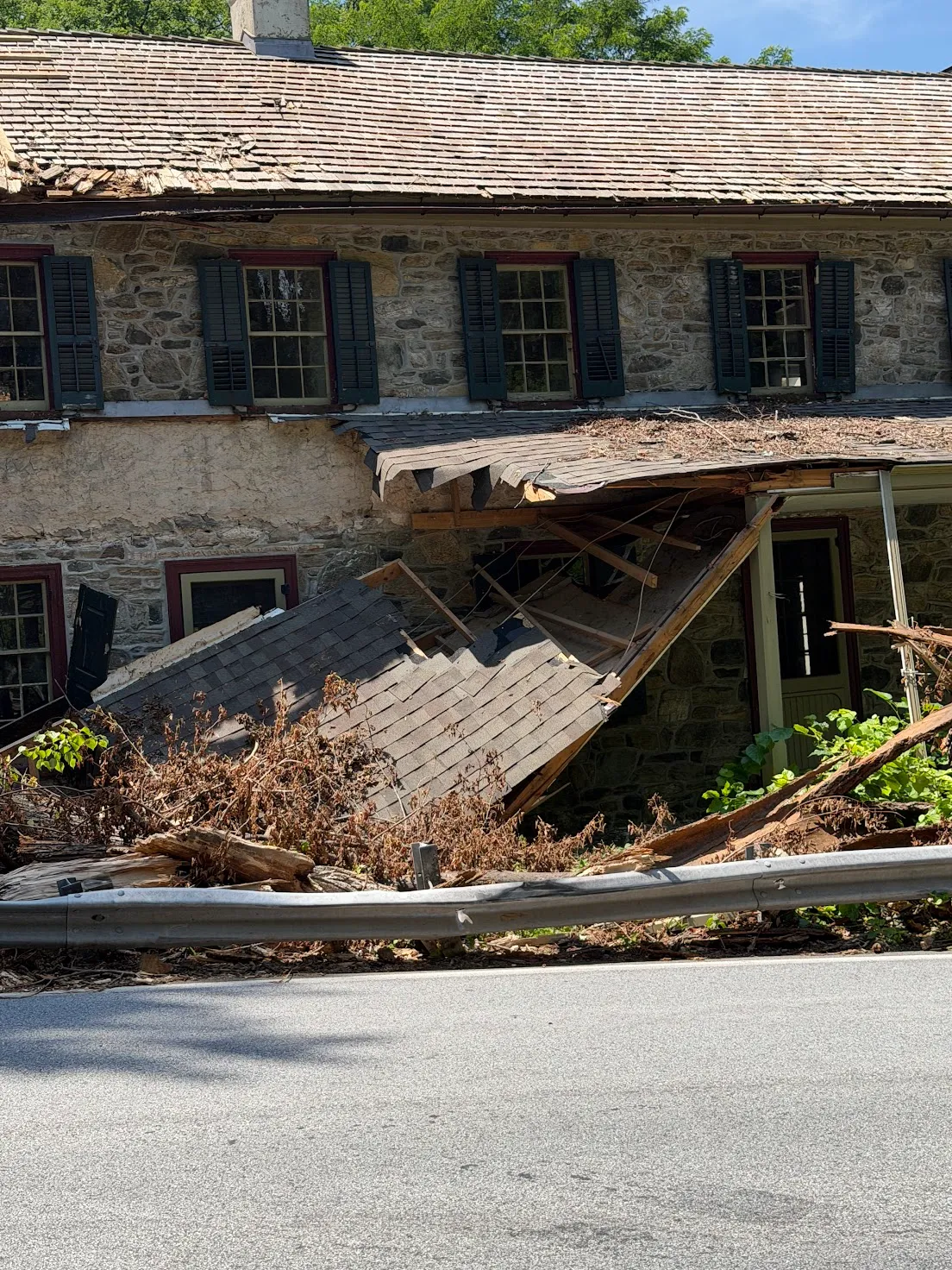
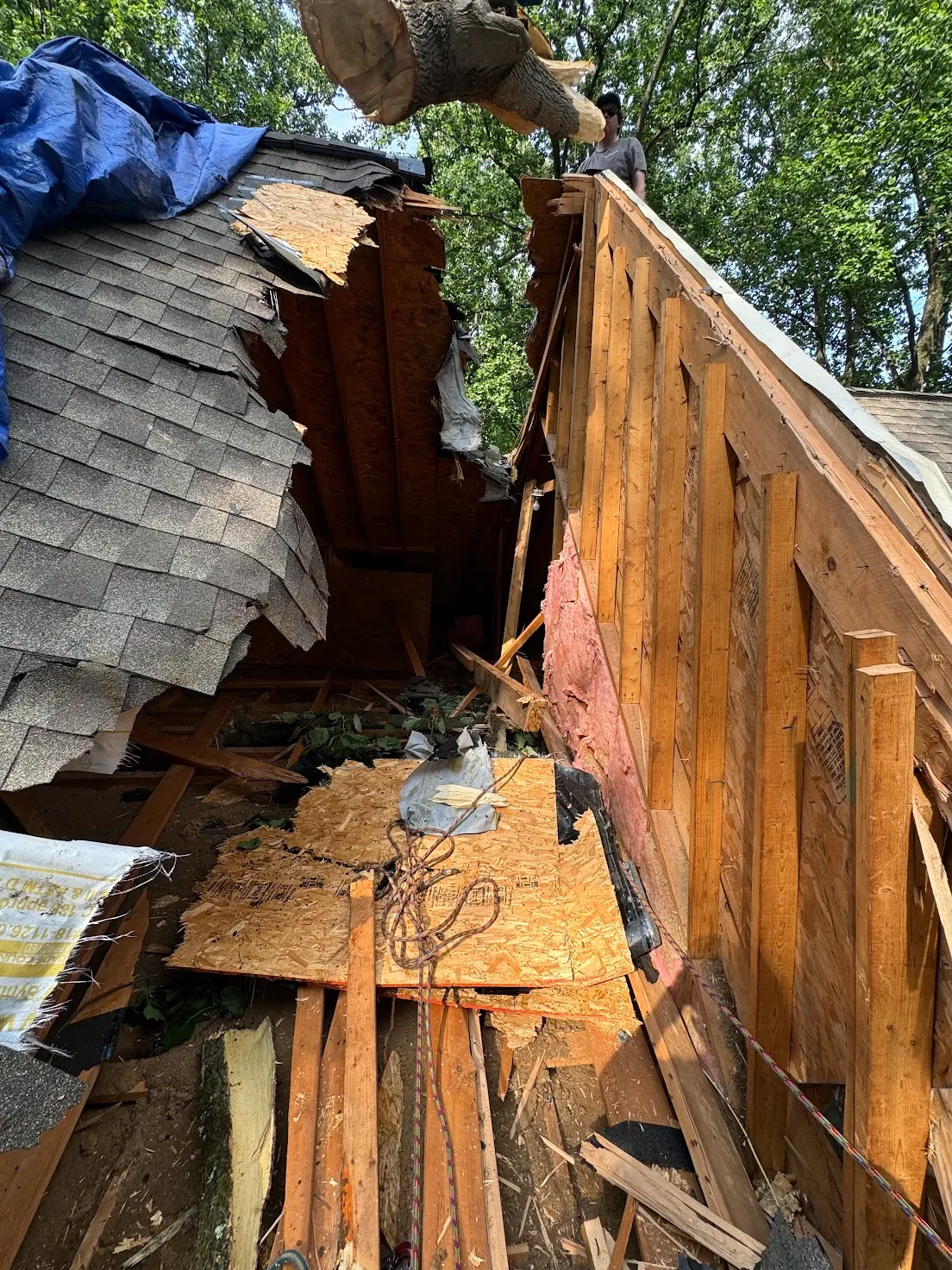
A tree strike is really three claims in one: emergency mitigation (tarping, board-up, temporary shoring), removal of the tree and debris, and the structural rebuild itself. Most policies cap debris removal at a modest sublimit, so if removal costs are blended into the repair estimate you can quietly lose thousands of dollars. We split them from the start.
Structure before finishes. Impact damage rarely stops at the shingles. Rafters, trusses, sheathing, top plates, and wall framing can all be compromised, and insulation, drywall, wiring, and HVAC runs in the affected bays usually have to come out. If the carrier's estimate reads like a re-roof, the structural scope is missing.
Whose tree was it? In Pennsylvania, your own policy generally responds when a neighbor's healthy tree falls on your home during a storm, you do not have to prove negligence to get paid, and waiting on a liability argument only delays your repairs.
Rain follows the opening. Water entering through a wind- or impact-created opening is covered, but it must be tied to the storm event and documented before drying begins, otherwise it reappears later as a separate, and often denied, water claim.
How it works
Four steps from storm to settlement.
Step 01
Free claim review
Tell us what the storm did. We review your policy and damage at no cost.
Step 02
Full documentation
Roof and exterior inspection, weather data, photos, and a line-item scope of loss.
Storm documentation includes slope-by-slope roof photography, date-of-loss wind speed and storm reports for your address, shingle discontinuation research, and an exterior and interior scope of loss.
Step 03
Submit claim and negotiate
We file and submit your claim and handle everything with the carrier.
Step 04
You get paid
Settlement issued on a fully documented claim. No recovery, no fee.
Not sure your offer is fair?
Talk to a licensed public adjuster. Free review, no obligation.
Why Legacy on a storm claim
Storm claims are won on the roof, not on the phone.
Wind losses come down to whether anyone actually documented the damage before the carrier decided it was age. We get on the roof, photograph every slope, tie the damage to a verified storm event, and price the full exterior and interior scope, then negotiate it. And we only get paid when you do.
- Slope-by-slope roof inspection with close-up documentation of every wind-created defect
- Date-of-loss weather and wind speed data pulled for your specific address
- Shingle discontinuation and matching research to support full replacement
- Exterior envelope, detached structures, and fencing included, not just the roof
- Interior water intrusion tied to the storm event before it becomes a denied claim
- Reinspections and engineer reports challenged with our own documentation
What a storm claim actually involves
- Storm damage vs. wear and tear
- One characterization decides whether your roof is paid for at all.
- Repair vs. full replacement
- Matching, discontinuation, and system integrity are what move a carrier.
- Roof vs. the whole property
- Siding, gutters, outbuildings, fencing, and interiors are routinely omitted.
- Flat deductible vs. percentage wind deductible
- A 2% wind deductible on a $400,000 home is $8,000 out of your pocket.
Licensed Pennsylvania public adjuster #726839. Contingency fee, nothing owed unless you recover.
Where we work
Storm damage public adjusters in your county.
Storm exposure is local. So is the housing stock, the roofing material, and the rebuild cost, which is why we inspect these claims in person rather than from satellite imagery.
Chester County
Derecho and thunderstorm wind events regularly hit the Brandywine and Route 30 corridors, and the county's older stone and frame homes bring matching and code issues most carrier estimates ignore.
Delaware County
Dense tree canopy and tight lot lines mean tree-fall and neighbor-property disputes are common here, alongside wind-lifted shingles on decades-old row and twin roofs.
Montgomery County
Remnant tropical systems moving up the Schuylkill routinely produce wind-driven rain intrusion, damage that surfaces on ceilings weeks after the storm has passed.
Berks County
Open farmland and ridge exposure west of Reading drive high straight-line wind speeds, with barns, outbuildings, and metal roofing frequently left off the first estimate.
Lancaster County
Severe thunderstorm and microburst activity across the county's open terrain damages large agricultural structures and standing-seam roofs that require specialty pricing.
Lehigh County
Wind funneling through the Lehigh Valley regularly strips siding and shingles across whole neighborhoods, which makes uniform-appearance and matching arguments especially important.
Google reviews
What our clients say
Real feedback from Pennsylvania homeowners and business owners who called Legacy first about storm and wind damage.
References
Sources we used
- Insurance Information Institute, Facts and statistics: U.S. catastrophes
Wind and hail are named perils on standard homeowners policies.
- Insurance Information Institute, Am I covered?
Your policy typically covers tree damage regardless of who owned the tree, subject to sublimits.
- Pennsylvania Insurance Department, Public Adjuster Contract
Public adjusters must use a written, department-approved contract and work on a contingency-fee basis.
Information is for general education and may not reflect your specific policy. Read your declarations page and policy form for exact coverage, limits, and exclusions.
Related claim types
Storm and wind damage claims handled across every county we serve, see the list above.
Call us before you call your insurance company.
Where we work
Serving Chester, Montgomery, Delaware, Berks, Lancaster and Lehigh counties
See how we handle storm and wind damage claims in your county.